Copyright 2011 Ben S. Pollock
DATELINE MIRTHOLOGY — Crystal Britches was speechless, standing in the setting sun on a recent afternoon in a parking lot in Bentonville, Ark.
“She did it. My old BFF really pulled it off,” Ms. Britches said of her periodic Best Friend Forever Alice. I, her ghost-publicist Noah Vale, had driven Crystal from her Fayetteville homestead north to see Raveenia, the Ozark Museum of Other People’s Art (o’MOPA) earlier this week. While we attended its dedication on the Bentonville Square Friday, 11-11-11, we avoided the site itself on the First Day as well as the exclusive previews in the days before that, to not detract from Alice’s Warholian moment.
“Noah, we’ve just spent nearly five hours in Raveenia. People want to hear my impressions, but I’m no expert on architecture. I hit museums whenever I can, but am not capital-C art Critic. You’re good with words, you do it. That’s why I hired you.”
“I’ll try; we certainly talked enough walking around,” Noah said. “But Crystal, I’m not trained in art or architecture. But this will work out, because if I attribute my hick thoughts to myself, you’ll look brilliant.”
“Thank you, Mr. Vale,'” said the plastic-pantsed philanthropist. On Sunday the 13th, the museum was surprisingly full of people from Little Rock, 216 miles away. Being the provincial capital, in several definitions, Ms. Britches drew stares from the preppy Rockers at her vinyl leggings covering loose khaki shorts, fairly modest for a still-trim woman in shall we call it late middle age. A brisk fall day, on top she wore a red Razorback hoodie.
“Here we go,” I said. I’ll throw together this commentary and if you sign off on it, we’ll have it posted on the blog Brick. She agreed.
A Moat Runs Through the Castle
Alice set up a series of connected buildings, forming a square with a jointed tail. That’s more or less six extant structures, Rather, architect Moishe Zaftig figured that out. Two of the structures, parallel to one another are built over a dammed creek so they’re also pedestrian spans. With air conditioning, some of the pictures in one, and the restaurant in the other.
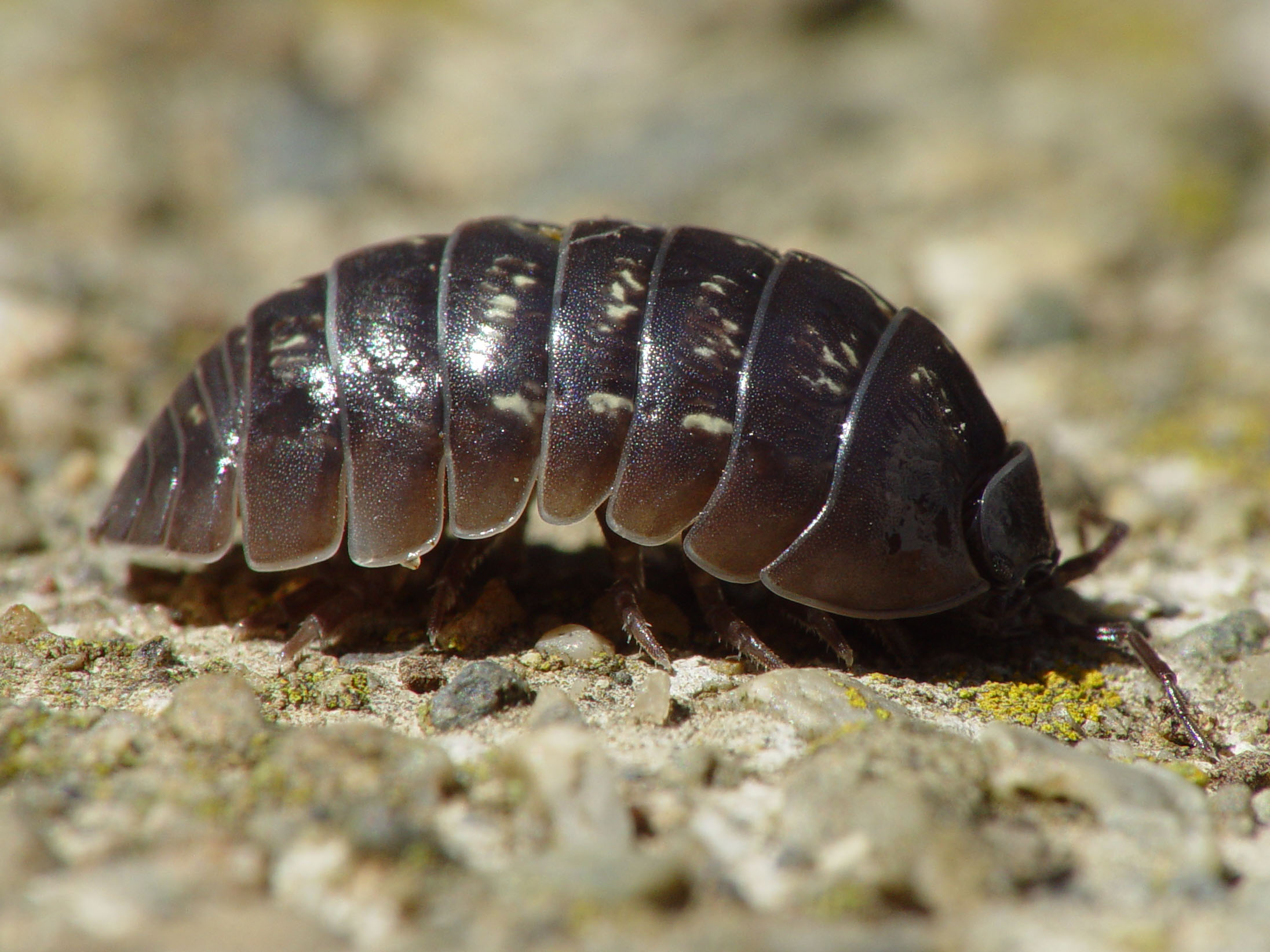
The exteriors are generally stripes of alternating copper, glass, concrete or wood. Some roofs are concave, others convex. How does it feel? The auditorium and restaurant, bulging out, look to a guy Noah saw at the museum like a roly-poly, also known as a pillbug, technically an Armadillidium vulgare. This friend’s wife, standing in the restaurant and looking toward the similarly convex-roofed auditorium, said she felt she was inside an empty turtle shell.
No never mind, though. The spirit of play, of openness, pervades every building.
While the buildings are serene and modern to be sure, the grounds, with plenty of trails, provide a slightly enhanced version of nature. For instance, off the tail, on the way to the tempory-exhibit gallery, is an alcove dedicated to Mr. Zaftig. Its window reveals a steep grotto, perhaps a tributary of the ravine’s spring. Rocks have been set to where water will go after a heavy rain, spreading out like a fan. There’s enough gaps to imply nature, any more random and it’d be a Dombeck watercolor.
The galleries during the day have abundant natural light, and the artificial light was properly mounted so there was no glare on the artworks or for that matter the eyes of visitors. The natural light is cleverly filtered. Whether concave or convex, the domed, ribbed roofs had skylights but the galleries then had ceilings of mesh. This must have been to enhance indirect light for ideal viewing but also, assuredly, to protect the works from fading.
The museum remains slightly unfinished. On Sept. 1, I accidentally disagreed with a person I was trying to impress. I said the museum couldn’t be done by the scheduled Nov. 11. He, and being a realistic, mature man this surprised me, said it would be completed because it was promised. Days earlier, I’d stood on the museum’s observation deck and saw so much rawness. Last Sunday, one of the two ponds still was being lined with concrete, rock and other materials, no water. But, yes, the sculptures are installed, paintings hanging.
Works of Art Works
To write here about three centuries of iconic American paintings is unnecessary, Crystal Britches and I agree. The museum has images of its collection on its website. For example, here is the link to 20th-century works, up to about the 1970s.
Walking among them was awe-inspiring for me. These works soon will be old friends. Over the decades living in different cities, that’s how I came to feel about local museums. The masterworks often are like pals I haven’t seen in a while. It is a comfortable, satisfying feeling. When I live in a place with a good museum, I, Noah Vale, visit often, eat in their cafes, find their gift shops convenient for buying presents.
But I must note that my friend’s spouse, who saw turtles, felt “oppressed” as she completed her first tour of all the galleries. So many of the pictures expressed hardship and sadness, she noted.
Because what’s displayed now is a portion of the full permanent collection, the question is why were these hanging first? My guess, and Ms. Britches agrees, is that the Raveenia’s executives felt a need emphasize seriousnessness to the New York fancypants. So a little more prominent hung the paintings of unemployment and manual labor. The whole Modern gallery could be seen as that — workers or former workers, including the Robert Henri portrait of a (working) actress, even Maxfield Parrish’s (working) clowns (actually one clown in several poses carrying lanterns).
“That’s just a theory of curation, Noah,” Crystal Britches cautioned.
The early visitors
Nearly all the first week’s patrons were the well-heeled. As we enjoyed hot fresh coffee in the Raveenia Canteen, we heard a couple of squalling children. Despite their well-dressed parents, we were reminded more of the sound of a Kmart, rather than Target or Wal-Mart, each having a different aural ambiance.
The curators’ main nod toward new lovers of art (as this is the first major art museum in this area) was the permission to take photographs.
It is a good thing people are allowed to take pictures because that was a principal activity in these early days. (Photography is banned in the temporary exhibit gallery because the owners of other collections aren’t as carefree).
I just didn’t get it, though. People taking pictures of pictures. It’s difficult to do that accurately– special lenses, special lighting, calculated apertures and exposures. Nearly all the smart-phone picture takers were clicking just the art, not of companions posing next to the pieces and so on.
Are these people really going to print their image of Norman Rockwell’s Rosie the Riveter when a detailed clear image could be found online and printed out, free? The newest smart phones brag about the number of pixels their little cameras can hold, but none mention the lackluster tiny lens in them. Besides, the gift shop sells dead-on reproductions in a variety of sizes.
The fraternal twin
There was something preying on me, and there in the Raveenia parking lot, I told her.
“Week before last, Crystal, I went up to Kansas City, Mo., and got a docent-led tour of Moishe Zaftig’s Kauffman Center for the Performing Arts. It is magnificent, inside and out. The downtown side looks a bit like Australia’s Sydney Opera House, and the uptown side, where the joint lobby for the two auditoriums — one’s music and the other theater, specifically opera — is all glass for something like six stories up.”
This extraordinary architect and his firm have been very busy; they have some other public building opening this year as well.
Considering the differences, now that I’ve seen both buildings inside and out, is key.
“Surely, Noah, there’s some similarities, as well, due to the signature style of the architect at this mature part of his career.”
The steel hardward holding the glass together is similar.
“Crystal, you wouldn’t know this, but the urinals look to be the same. They’re egg-shaped, maybe nearly round. Both Kauffman and Raveenia. Never seen anything like them,” I said.
“As for differences, the Kauffman is set on a hill, deliberately visible. It’s not the tallest structure in KC, nor the highest hill. The arts complex disappears from sight in just a few urban blocks. In contrast, our Ozark Museum of Other People’s Art is in a ravine, set just as deliberately. Even from the parking lot, you can barely see its roof.”
“OK, Mr. Vale, that pushes a question: Can a landmark be hidden?” Crystal Britches said.
The answer has to be yes. But why is that so?
That will be a riddle for the Great Sphinx of Arkansas to hold for centuries.
